Why Do I Keep Repeating the Same Patterns?

Ceri Pritchard • 27 October 2026

I'm not sure about you, but I know I've had a range of patterns over the years that I've automatically fallen into, sometimes without even realising I was doing it. Saying yes when I really meant no. Putting myself at the bottom of the list. Wanting to give 100% to every single area of my life, even when I was mentally or physically exhausted.


And why?


Well, for me, a lot of it came down to not wanting to let anyone down. That people-pleaser in me would often take over before I'd even had a chance to stop and think about what I needed. The problem was, giving 100% to everything and everyone wasn't sustainable. It wasn't then, and it isn't now.


When saying no feels like letting someone down

For a long time, saying no felt uncomfortable. Almost as though I was failing someone. There was the guilt of not being able to do something for somebody else, but also the worry about what they might think of me.  Would they think I was selfish? Would they be disappointed? Would they think I didn't care?


Sometimes I would say yes simply to avoid those feelings, even when I knew I was already exhausted.

I'd find myself thinking, I should be able to do this. I should be there. I should be able to manage.

There's that word again. Should.


It's amazing how much pressure we can place on ourselves with one little word. While I was busy worrying about how others might feel or what they might think, I wasn't always noticing the impact it was having on me.

I was exhausted, sometimes unwell, and still expecting myself to keep going. Looking back, I can recognise that I wasn't giving myself the same understanding or compassion that I would so freely offer somebody else.


Why do we fall into these patterns?

I think being human is complicated. Sometimes our patterns become so familiar that they feel like part of who we are. We might have learned somewhere along the way that being helpful keeps others happy, that saying no causes disappointment, or that putting ourselves first is somehow selfish and perhaps those responses made sense at one time in our lives. But what happens when we continue responding in the same way, even when those patterns are no longer helping us?


For me, the change didn't come from telling myself to stop being a people-pleaser. It came from becoming curious about why I found it so difficult to say no in the first place. Rather than criticising myself for doing it again, I started trying to understand what was happening and that curiosity gradually opened the door to something else.  Self-compassion.


Learning that my needs matter too

One of the things I've come to recognise is that meeting my own needs doesn't mean I care any less about other people. Sometimes I can say yes, and that's absolutely okay. Other times, I might need to say, I can't today. Not because I'm selfish. Not because I don't care. But because I might be exhausted, unwell or simply struggling myself and that's okay too.


I've also had to recognise that I can't always control what other people think of me. Someone might feel disappointed when I say no, and that can be uncomfortable, particularly when I'm so used to trying to keep everyone happy. But somebody else's disappointment doesn't automatically mean I've done something wrong. I'm still someone who likes to be there for others. That's an important part of who I am, and I don't want to lose that.

But I've also learned that I don't have to punish myself when I can't be everything to everyone. I can care about other people and care about myself. Those two things don't have to compete.


Catching myself in the spiral

Of course, recognising a pattern doesn't mean it suddenly disappears. There are still times when I notice myself overcommitting, saying yes too quickly or slipping back into that familiar spiral of feeling that I should be doing more.

Sometimes that guilt or worry about what others might think still shows up. The difference now is that I'm becoming better at noticing it. Sometimes I catch myself before I've said yes. Other times, I recognise it afterwards and rather than giving myself a hard time, I try to pause and check in. What do I actually need right now? Am I saying yes because I genuinely want to, or because I'm worried about disappointing someone? Am I making this decision based on what I can manage, or what I think others expect of me? I'm not always going to get it right, and that's part of being human too.


What would I say to a friend?

There's one question I often come back to when I notice myself slipping into that spiral I say to myself "What would I say if this was my friend struggling with this?"


Would I tell them they should be doing more? That they were selfish for needing a rest? That they were letting everyone down because they couldn't manage everything? Of course I wouldn't. I'd offer kindness. I'd offer compassion. I'd remind them that they're enough, that their needs matter and that it's okay to say no. So why wouldn't I offer that same understanding to myself?  It's such a simple question, but it's helped me begin to change the way I respond to myself.


Perhaps it's about understanding, not fixing

I don't think breaking patterns is always about becoming a completely different person.  Sometimes it's about understanding ourselves a little better. Recognising those automatic responses, noticing where they might have come from and giving ourselves permission to choose something different and perhaps, most importantly, learning not to criticise ourselves when those familiar patterns show up again. Because change takes time. I still want to be someone who shows up for the people I care about. But I also want to be someone who shows up for myself and maybe that's what I'm learning. I don't have to stop caring for others to start caring for myself.


A little reflection for you

As you read this, I wonder whether there are patterns in your own life that feel familiar.  Perhaps you find it difficult to say no. Maybe you feel responsible for keeping everyone happy. Perhaps you worry about how others see you or maybe your pattern looks completely different. Whatever it might be, I wonder what would happen if, rather than criticising yourself for falling into it again, you became a little more curious:


  • What am I noticing about myself?
  • What might this pattern have helped me with in the past?
  • Is it still helping me now?
  • What would I say to a friend who was experiencing the same thing?


You don't have to have all the answers. Sometimes simply noticing is a meaningful place to begin and perhaps we could all benefit from offering ourselves a little more of the kindness we so readily give to others.


Until next time,

Ceri
by Ceri Pritchard • 5 October 2026
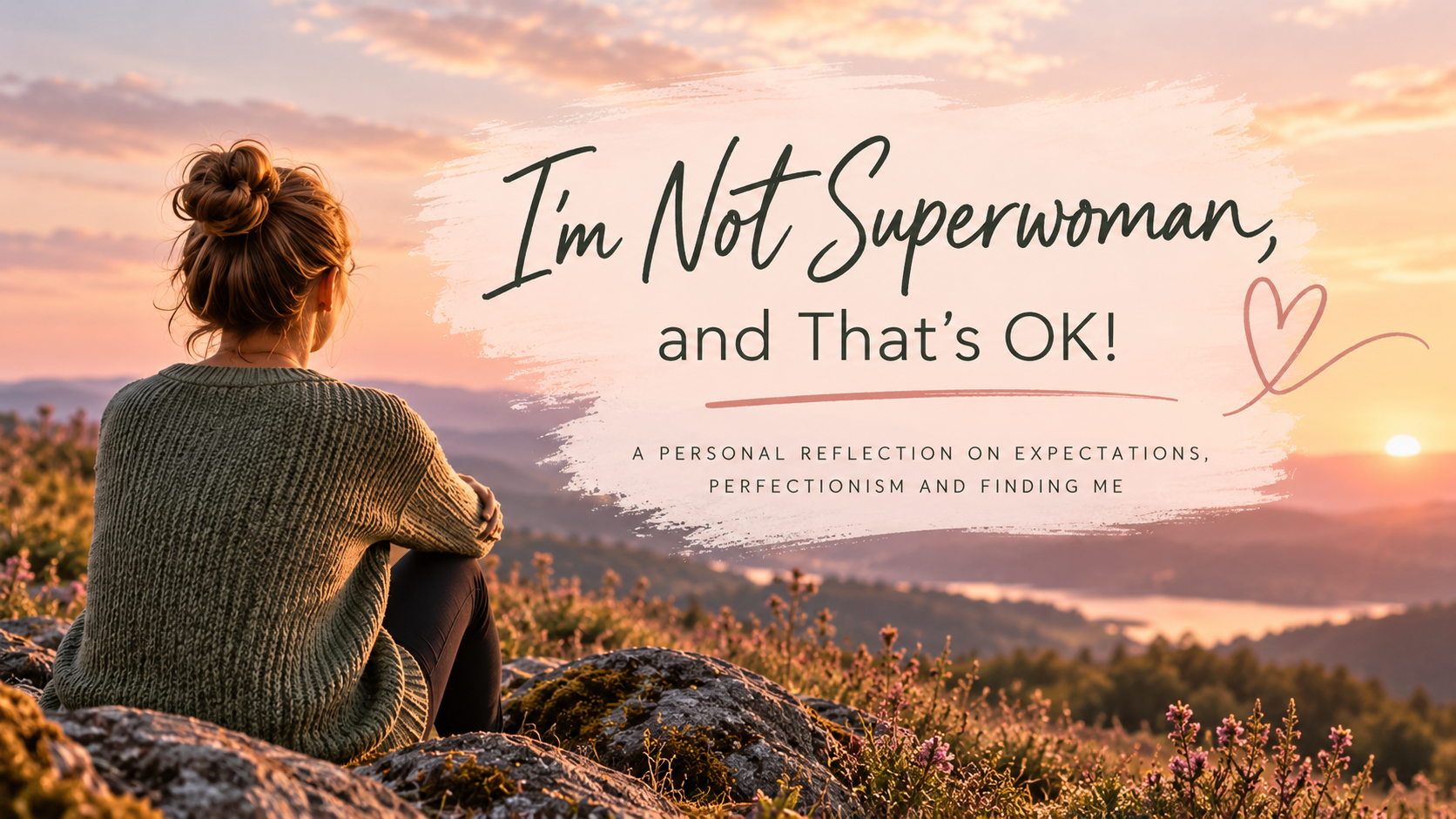
For years, I think I believed I had to be Superwoman. I had to be the person who could cope, who could juggle everything, keep going, look after everyone else and somehow hold it all together. Then, in 2015, my body had other ideas. I experienced my first non-epileptic seizure and what followed was a journey of appointments, uncertainty and eventually a diagnosis of Functional Neurological Disorder (FND). Alongside this, I was also dealing with sight loss and other health difficulties. Suddenly, the person who had always just kept going couldn't keep going in quite the same way anymore. I found that incredibly difficult to accept. All the hats we wear During my own counselling journey, I remember doing an exercise where I drew myself as Superwoman. Around the picture I started thinking about all the different roles I had in my life. Mam, wife, daughter, sister, friend, manager, counsellor, colleague... The list seemed to go on and on. Looking at it, I realised just how many different hats I was wearing and how much of my life was about being something to somebody else. Then something struck me. Where was Ceri? It sounds like such a simple question, but actually it was quite a powerful one for me. Somewhere underneath everything I was doing, all the roles I was filling and everything I thought I needed to be for everybody else, I'd lost sight of me. I'd lost Ceri. I think that realisation has stayed with me because it made me recognise how easy it is to become so caught up in looking after everyone and everything around us that we forget to check in with ourselves. What does everybody need from me? I think this is something many of us do without even realising we're doing it. We're constantly thinking about what everybody else needs. What do the children need? What does my partner need? What needs doing for work? Is there something I've forgotten? What should I be doing next? Am I letting somebody down? Our minds can be constantly working through that invisible list. How often, amongst all of that, do we stop and ask ourselves a very different question What do I need? I know for me that question hasn't always come easily. Even asking it can somehow feel selfish, particularly when we're so used to putting everybody else first. But I've come to realise that it isn't selfish at all. Whose expectations are they anyway? Expectations have been another big part of my own journey. I've always had high expectations of myself. I can put enormous pressure on myself to do things well, to achieve, to keep going and to get things "right". I've even managed to turn things that are supposed to be good for me into another expectation! Exercise is a really good example. Rather than thinking about moving my body because it might help me feel better, it can very quickly become something else I should be doing. Then, if I don't manage it, instead of simply accepting that perhaps today wasn't the day, I can feel as though I've failed. I've had to become much more aware of that little word should. I should be doing more. I should be coping better. I should have achieved this by now. I should be able to manage. There are so many shoulds we can place on ourselves. Something I've learned to do is become curious about them rather than automatically accepting them. Whose expectation is this anyway? Is it actually mine? Is it something I've picked up from other people, from society or perhaps from ideas I've carried for years about what a good mam, wife, counsellor, professional or woman is supposed to look like? Perhaps the most important question for me has become is this expectation actually helping me? Sometimes the answer is yes. Sometimes our expectations can motivate us and help us grow. But sometimes they simply make us feel that however much we're doing, it is never quite enough. Learning to be kinder to myself I'd love to say that I realised all of this and suddenly became wonderfully balanced, stopped putting pressure on myself and now have it all worked out. I haven't! I'm still learning. I can still put pressure on myself. I still take on too much sometimes. I can still find myself saying yes when perhaps I need to say no, and I'm still learning to recognise when I need to stop. The difference is that I understand myself a little better now. Counselling, CBT, EMDR and my own personal development have all helped me to explore who I am, rather than simply who I think I should be. I've also realised that self-care isn't always the lovely things we often associate with it. It isn't just bubble baths, candles or taking some time off. Sometimes self-care is saying no when you'd normally say yes. Sometimes it's admitting you're tired. Sometimes it's asking somebody else for help. Sometimes it's changing the expectations you've placed on yourself. Sometimes it's accepting that good enough really is good enough. For me, it can also be as simple as stopping for a moment and asking myself, what do I need today? I don't always get it right, and I don't always listen to the answer either, but I'm getting better at asking the question. I'm not Superwoman Perhaps one of the biggest things I've learned through all of this is that personal growth doesn't have a finishing line. There isn't going to be a day when I wake up and suddenly have everything worked out. I'm still growing. I'm still learning about myself. I'm still getting things wrong and I'm still learning how to be kinder to myself when I do. Perhaps that's actually the point. I don't have to be everything to everybody. I don't have to get everything right and I don't have to prove my worth by how much I can carry. I don't need to be perfect anymore. I need to be me. So perhaps I'll leave you with something to think about too. Who are you underneath all the hats you wear? When was the last time you stopped thinking about what everybody else needed from you and genuinely asked yourself, What do I need? You might be surprised by the answer. If some of this feels familiar, counselling can offer a space where, for a little while, you don't have to look after anybody else. You don't have to perform a role, get anything right or have all the answers. It can simply be a space to explore you, at your own pace and without judgement. Look after yourself! Ceri
by Ceri Pritchard • 17 September 2026
Making the decision to contact a counsellor can feel like a big step and then another thought can quickly appear: “What on earth am I going to say?” If you've never experienced counselling before, it's completely understandable that the first session might feel unfamiliar. You don't need to arrive prepared You don't need to have your story organised. You don't need to know exactly why you feel the way you do and you certainly don't need to arrive with a list of things to talk about. Our first session is an opportunity for us to begin getting to know one another. We can talk about what has brought you to counselling, what you might like support with and what you hope counselling could offer you. But we go at your pace. Counselling isn't an interview I'm not sitting opposite you with a checklist waiting for the correct answers. Counselling is a relationship. Particularly in the beginning, it's about creating a space where you can gradually feel safe enough to explore what's happening for you. There may be things you're ready to talk about straight away and other things that take much longer. That's okay. Silence is okay too. Perhaps the most important question A first session isn't only about whether I think I can support you. It's also your opportunity to begin asking: “Does this feel like someone I could talk to?” The relationship you have with your counsellor matters. You are allowed to ask questions, take your time and notice how the experience feels. You don't have to tell your whole story in the first hour. Sometimes the first step is simply turning up and that's enough for us to begin.
by Ceri Pritchard • 17 September 2026
New Title