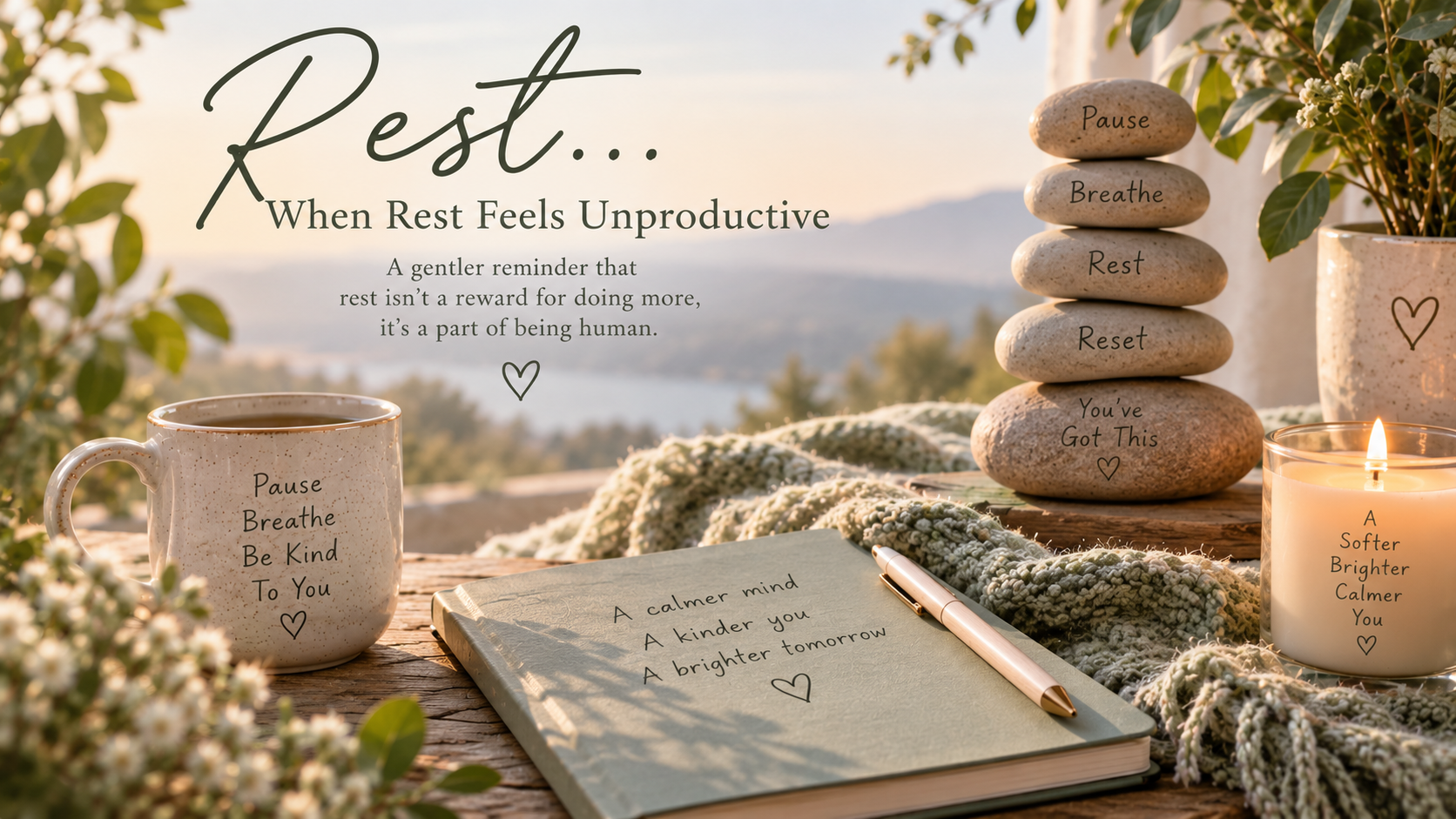
When Rest Feels Unproductive

Ceri Pritchard • 17 September 2026

New Title

Have you ever finally sat down to rest…and immediately started thinking about everything you should be doing?

The washing. The emails. The work you haven't finished. The person you haven't replied to. We can become so accustomed to being busy that stopping can actually feel uncomfortable.


When did rest become something we have to earn?

There can be an unspoken message in our lives that being productive is good and doing nothing is somehow wasteful.  So we keep going.  Sometimes we don't realise how tired we are until our body or mind begins asking us to slow down. Rest doesn't always mean sleeping or spending an entire day doing nothing, either. It might mean having ten quiet minutes with a cup of tea. Sitting outside. Reading. Listening to music. Saying no to something. Putting your phone away. Or simply allowing yourself not to achieve anything for a little while.


Listening to yourself

Perhaps rather than asking: “What should I be doing?” We could occasionally ask: “What do I need right now?” The answer won't always be rest.

But sometimes it will be and perhaps part of looking after ourselves is learning that we don't have to justify every moment of stillness. You are allowed to have moments in your life that aren't about achieving, fixing or completing something.  Sometimes you can simply be.
by Ceri Pritchard 17 September 2026
Making the decision to contact a counsellor can feel like a big step and then another thought can quickly appear: “What on earth am I going to say?” If you've never experienced counselling before, it's completely understandable that the first session might feel unfamiliar. You don't need to arrive prepared You don't need to have your story organised. You don't need to know exactly why you feel the way you do and you certainly don't need to arrive with a list of things to talk about. Our first session is an opportunity for us to begin getting to know one another. We can talk about what has brought you to counselling, what you might like support with and what you hope counselling could offer you. But we go at your pace. Counselling isn't an interview I'm not sitting opposite you with a checklist waiting for the correct answers. Counselling is a relationship. Particularly in the beginning, it's about creating a space where you can gradually feel safe enough to explore what's happening for you. There may be things you're ready to talk about straight away and other things that take much longer. That's okay. Silence is okay too. Perhaps the most important question A first session isn't only about whether I think I can support you. It's also your opportunity to begin asking: “Does this feel like someone I could talk to?” The relationship you have with your counsellor matters. You are allowed to ask questions, take your time and notice how the experience feels. You don't have to tell your whole story in the first hour. Sometimes the first step is simply turning up and that's enough for us to begin.
by Ceri Pritchard 17 September 2026
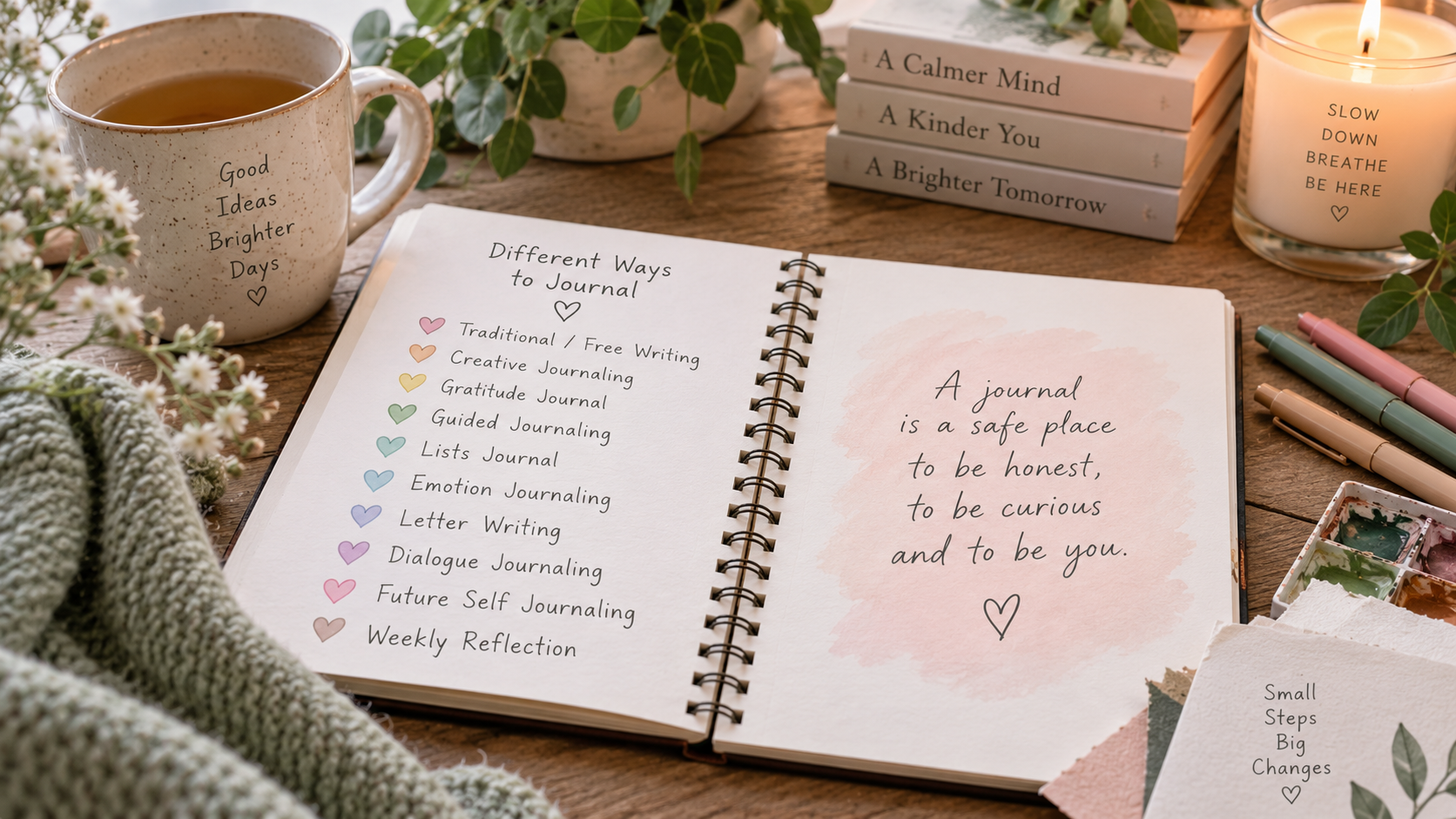
When we hear the word journaling, we often imagine sitting down with a notebook and writing pages and pages about our day. But journaling doesn't have to look like that. One of the things I love about journaling is the freedom it can give us to express ourselves in whatever way feels right for us. There are no marks, no spelling tests and no expectation that what you create has to make sense to anybody else. Your journal belongs to you. Finding your way F or some people, traditional or free journaling works beautifully. You simply begin writing and allow whatever is in your mind to come onto the page. For others, staring at a blank page can feel overwhelming. That's where different forms of journaling can help. You might enjoy creative journaling, using colour, drawings, doodles, photographs or words cut from magazines. A gratitude journal can involve simply noticing a few things you appreciated that day, including the very small things. Guided journaling gives you a question or prompt to respond to, while an emotion journal can help you notice and explore what you're feeling. You might even write a letter that you never intend to send, have a written dialogue with a part of yourself, write to your future self, or simply create lists. There really isn't a correct way. A space without judgement Sometimes writing or creating something on paper allows us to express thoughts and feelings that are difficult to say aloud. You don't have to analyse them or immediately understand them. Sometimes it is enough just to give them somewhere to go. Try givin g yourself five or ten minutes with a notebook and see what happens. Write, draw, scribble, make a list or simply finish the sentence: “Right now, I notice…” And remember, nobody is grading your journal. It doesn't need to be beautiful. It just needs to be yours. I have also created a free Types of Journaling resource with some different approaches and ideas to help you get started. 
by Ceri Pritchard 22 September 2024
Building Self- Esteem and how self reflection can help!