Services

How Can I Help

Counselling


A warm and supportive space where you can explore what is happening for you, at your own pace and without judgement.

I offer integrative counselling tailored to you as an individual, with sessions available in person, online or by telephone.


FREE initial 15-minute consultation available.


Find Out More

Clinical Supervision


A supportive and collaborative space for counsellors to reflect openly on their client work, professional development and themselves within the therapeutic relationship.


My supervision is humanistic and integrative, with a focus on supporting you to develop your own way of working.


Find out More

Training & Workshops


Friendly, engaging and practical training for counsellors, organisations and individuals. I offer bespoke and ready-made workshops covering counselling skills, wellbeing, personal development and a range of therapeutic topics, tailored to the needs of your group.


Find Out More

Life can sometimes feel difficult, overwhelming or simply not quite how we hoped it would be. Having someone to talk to, who will really listen without judgement, can make a difference.


I offer a warm, supportive and down-to-earth approach to counselling, alongside professional clinical supervision for trainee and qualified counsellors.


Whether you are looking for support for yourself, your relationship, or looking for a supervisor to support you in your counselling practice, you are very welcome to get in touch.


Hi, I am Ceri.

I'm a BACP Accredited Counsellor and qualified Clinical Supervisor based in the Neath Valley, South Wales.


My approach is warm, friendly and down-to-earth. I believe that one of the most important parts of counselling is finding someone you feel comfortable talking to and being able to be yourself without feeling judged.


I work from a Humanistic Integrative approach, which simply means I don't believe that one way of counselling suits everyone. We are all different, with different experiences, relationships and ways of making sense of the world. I therefore draw on different therapeutic approaches while keeping you, your needs and the relationship we build at the centre of our work together.


Alongside my counselling practice, I am also a qualified Clinical Supervisor and offer supervision to trainee and qualified counsellors.  I offer face-to-face sessions in the Neath area as well as online and telephone appointments.

More about me

From The Reflection Space

Latest Posts

by Ceri Pritchard • 5 October 2026
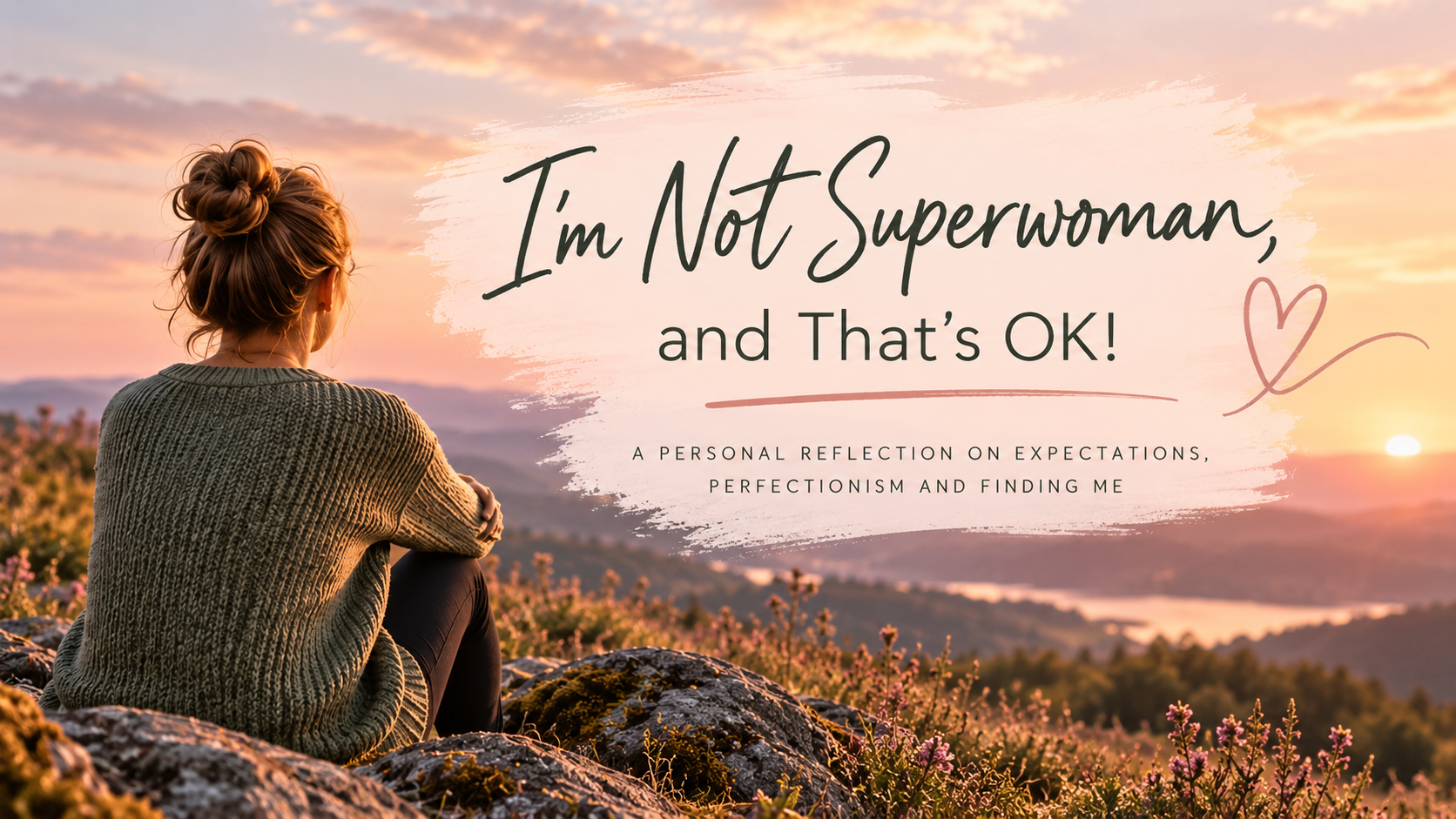
For years, I think I believed I had to be Superwoman. I had to be the person who could cope, who could juggle everything, keep going, look after everyone else and somehow hold it all together. Then, in 2015, my body had other ideas. I experienced my first non-epileptic seizure and what followed was a journey of appointments, uncertainty and eventually a diagnosis of Functional Neurological Disorder (FND). Alongside this, I was also dealing with sight loss and other health difficulties. Suddenly, the person who had always just kept going couldn't keep going in quite the same way anymore. I found that incredibly difficult to accept. All the hats we wear During my own counselling journey, I remember doing an exercise where I drew myself as Superwoman. Around the picture I started thinking about all the different roles I had in my life. Mam, wife, daughter, sister, friend, manager, counsellor, colleague... The list seemed to go on and on. Looking at it, I realised just how many different hats I was wearing and how much of my life was about being something to somebody else. Then something struck me. Where was Ceri? It sounds like such a simple question, but actually it was quite a powerful one for me. Somewhere underneath everything I was doing, all the roles I was filling and everything I thought I needed to be for everybody else, I'd lost sight of me. I'd lost Ceri. I think that realisation has stayed with me because it made me recognise how easy it is to become so caught up in looking after everyone and everything around us that we forget to check in with ourselves. What does everybody need from me? I think this is something many of us do without even realising we're doing it. We're constantly thinking about what everybody else needs. What do the children need? What does my partner need? What needs doing for work? Is there something I've forgotten? What should I be doing next? Am I letting somebody down? Our minds can be constantly working through that invisible list. How often, amongst all of that, do we stop and ask ourselves a very different question What do I need? I know for me that question hasn't always come easily. Even asking it can somehow feel selfish, particularly when we're so used to putting everybody else first. But I've come to realise that it isn't selfish at all. Whose expectations are they anyway? Expectations have been another big part of my own journey. I've always had high expectations of myself. I can put enormous pressure on myself to do things well, to achieve, to keep going and to get things "right". I've even managed to turn things that are supposed to be good for me into another expectation! Exercise is a really good example. Rather than thinking about moving my body because it might help me feel better, it can very quickly become something else I should be doing. Then, if I don't manage it, instead of simply accepting that perhaps today wasn't the day, I can feel as though I've failed. I've had to become much more aware of that little word should. I should be doing more. I should be coping better. I should have achieved this by now. I should be able to manage. There are so many shoulds we can place on ourselves. Something I've learned to do is become curious about them rather than automatically accepting them. Whose expectation is this anyway? Is it actually mine? Is it something I've picked up from other people, from society or perhaps from ideas I've carried for years about what a good mam, wife, counsellor, professional or woman is supposed to look like? Perhaps the most important question for me has become is this expectation actually helping me? Sometimes the answer is yes. Sometimes our expectations can motivate us and help us grow. But sometimes they simply make us feel that however much we're doing, it is never quite enough. Learning to be kinder to myself I'd love to say that I realised all of this and suddenly became wonderfully balanced, stopped putting pressure on myself and now have it all worked out. I haven't! I'm still learning. I can still put pressure on myself. I still take on too much sometimes. I can still find myself saying yes when perhaps I need to say no, and I'm still learning to recognise when I need to stop. The difference is that I understand myself a little better now. Counselling, CBT, EMDR and my own personal development have all helped me to explore who I am, rather than simply who I think I should be. I've also realised that self-care isn't always the lovely things we often associate with it. It isn't just bubble baths, candles or taking some time off. Sometimes self-care is saying no when you'd normally say yes. Sometimes it's admitting you're tired. Sometimes it's asking somebody else for help. Sometimes it's changing the expectations you've placed on yourself. And sometimes it's accepting that good enough really is good enough. For me, it can also be as simple as stopping for a moment and asking myself, what do I need today? I don't always get it right, and I don't always listen to the answer either, but I'm getting better at asking the question. I'm not Superwoman Perhaps one of the biggest things I've learned through all of this is that personal growth doesn't have a finishing line. There isn't going to be a day when I wake up and suddenly have everything worked out. I'm still growing. I'm still learning about myself. I'm still getting things wrong and I'm still learning how to be kinder to myself when I do. Perhaps that's actually the point. I don't have to be everything to everybody. I don't have to get everything right and I don't have to prove my worth by how much I can carry. I don't need to be perfect anymore. I need to be me. So perhaps I'll leave you with something to think about too. Who are you underneath all the hats you wear? When was the last time you stopped thinking about what everybody else needed from you and genuinely asked yourself, What do I need? You might be surprised by the answer. if some of this feels familiar, counselling can offer a space where, for a little while, you don't have to look after anybody else. You don't have to perform a role, get anything right or have all the answers. It can simply be a space to explore you, at your own pace and without judgement. Look after yourself! Ceri
by Ceri Pritchard • 17 September 2026
Making the decision to contact a counsellor can feel like a big step and then another thought can quickly appear: “What on earth am I going to say?” If you've never experienced counselling before, it's completely understandable that the first session might feel unfamiliar. You don't need to arrive prepared You don't need to have your story organised. You don't need to know exactly why you feel the way you do and you certainly don't need to arrive with a list of things to talk about. Our first session is an opportunity for us to begin getting to know one another. We can talk about what has brought you to counselling, what you might like support with and what you hope counselling could offer you. But we go at your pace. Counselling isn't an interview I'm not sitting opposite you with a checklist waiting for the correct answers. Counselling is a relationship. Particularly in the beginning, it's about creating a space where you can gradually feel safe enough to explore what's happening for you. There may be things you're ready to talk about straight away and other things that take much longer. That's okay. Silence is okay too. Perhaps the most important question A first session isn't only about whether I think I can support you. It's also your opportunity to begin asking: “Does this feel like someone I could talk to?” The relationship you have with your counsellor matters. You are allowed to ask questions, take your time and notice how the experience feels. You don't have to tell your whole story in the first hour. Sometimes the first step is simply turning up and that's enough for us to begin.
by Ceri Pritchard • 17 September 2026
New Title
by Ceri Pritchard • 17 September 2026
When we hear the word journaling, we often imagine sitting down with a notebook and writing pages and pages about our day. But journaling doesn't have to look like that. One of the things I love about journaling is the freedom it can give us to express ourselves in whatever way feels right for us. There are no marks, no spelling tests and no expectation that what you create has to make sense to anybody else. Your journal belongs to you. Finding your way F or some people, traditional or free journaling works beautifully. You simply begin writing and allow whatever is in your mind to come onto the page. For others, staring at a blank page can feel overwhelming. That's where different forms of journaling can help. You might enjoy creative journaling, using colour, drawings, doodles, photographs or words cut from magazines. A gratitude journal can involve simply noticing a few things you appreciated that day, including the very small things. Guided journaling gives you a question or prompt to respond to, while an emotion journal can help you notice and explore what you're feeling. You might even write a letter that you never intend to send, have a written dialogue with a part of yourself, write to your future self, or simply create lists. There really isn't a correct way. A space without judgement Sometimes writing or creating something on paper allows us to express thoughts and feelings that are difficult to say aloud. You don't have to analyse them or immediately understand them. Sometimes it is enough just to give them somewhere to go. Try givin g yourself five or ten minutes with a notebook and see what happens. Write, draw, scribble, make a list or simply finish the sentence: “Right now, I notice…” And remember, nobody is grading your journal. It doesn't need to be beautiful. It just needs to be yours. I have also created a free Types of Journaling resource with some different approaches and ideas to help you get started. 
Show More

Thinking about counselling or supervision?


Choosing a counsellor or supervisor is a personal decision, and it's okay to ask questions before deciding whether someone feels right for you.


If you would like to find out more about counselling, couples counselling or clinical supervision, please feel free to get in touch.


Get in Touch

Contact us