There’s No Right Way to Journal: Finding a Way to Express Yourself
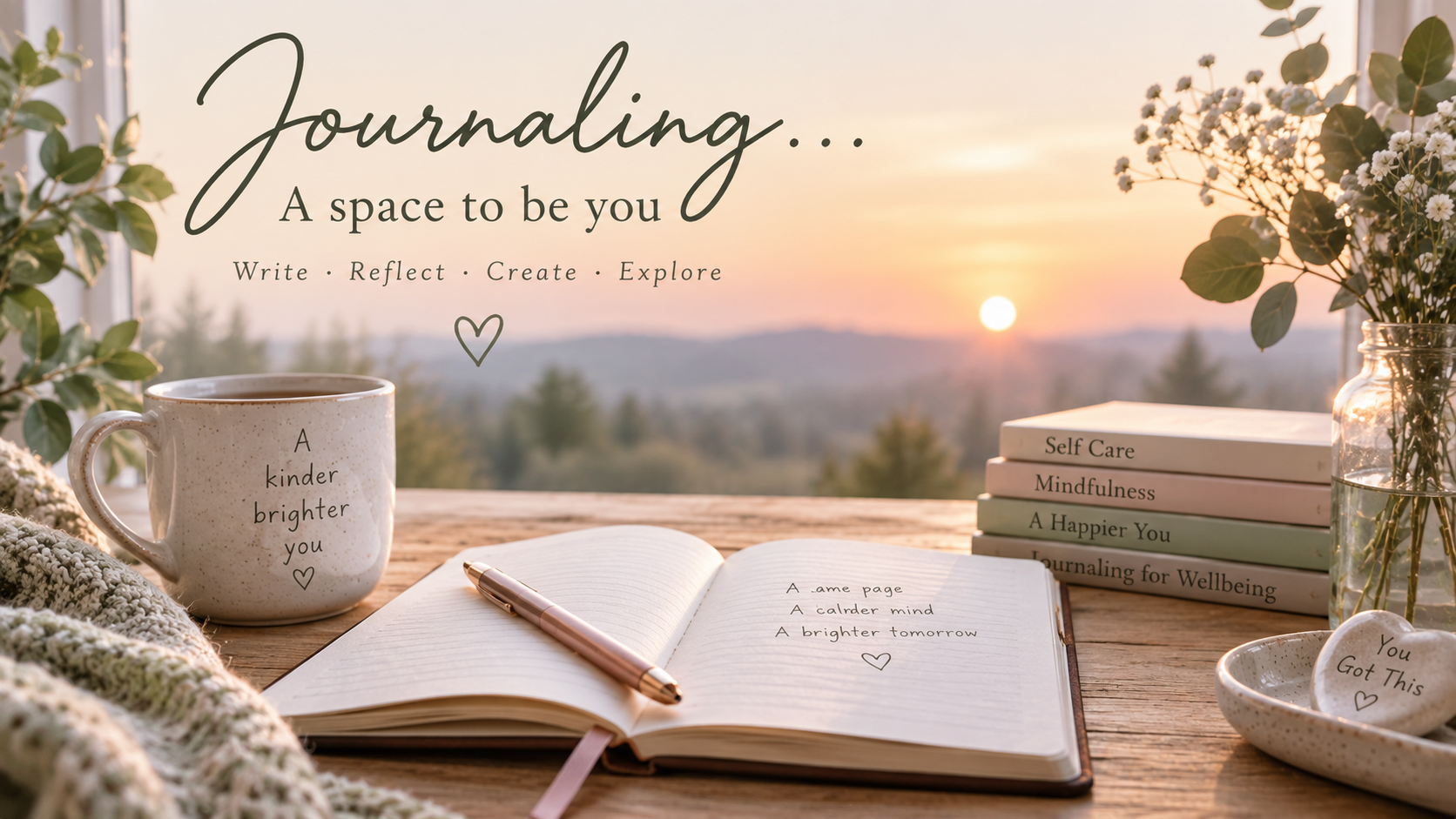
When we hear the word journaling, we often imagine sitting down with a notebook and writing pages and pages about our day.
But journaling doesn't have to look like that.
One of the things I love about journaling is the freedom it can give us to express ourselves in whatever way feels right for us. There are no marks, no spelling tests and no expectation that what you create has to make sense to anybody else. Your journal belongs to you.
Finding your way
For some people, traditional or free journaling works beautifully. You simply begin writing and allow whatever is in your mind to come onto the page. For others, staring at a blank page can feel overwhelming. That's where different forms of journaling can help. You might enjoy creative journaling, using colour, drawings, doodles, photographs or words cut from magazines. A gratitude journal can involve simply noticing a few things you appreciated that day, including the very small things. Guided journaling gives you a question or prompt to respond to, while an emotion journal can help you notice and explore what you're feeling. You might even write a letter that you never intend to send, have a written dialogue with a part of yourself, write to your future self, or simply create lists. There really isn't a correct way.
A space without judgement
Sometimes writing or creating something on paper allows us to express thoughts and feelings that are difficult to say aloud. You don't have to analyse them or immediately understand them. Sometimes it is enough just to give them somewhere to go. Try giving yourself five or ten minutes with a notebook and see what happens. Write, draw, scribble, make a list or simply finish the sentence:
“Right now, I notice…”
And remember, nobody is grading your journal. It doesn't need to be beautiful. It just needs to be yours. I have also created a free Types of Journaling resource with some different approaches and ideas to help you get started.